Why the Fastest-Growing RV Owner Is Your Storage Facility’s Most Important New Customer
This post was created with the help of AI. Then it was reviewed, edited, and published by a real person.
The American RV landscape is undergoing a generational transformation that is reshaping everything from the types of rigs being purchased to the way storage facilities are being found, evaluated, and chosen. If you own an RV — or if you operate an RV storage facility — understanding this shift is not just interesting. It is essential.
The numbers tell a compelling story. According to the 2025 Go RVing Demographic Profile, the median age of the American RV owner dropped from 53 in 2021 to 49 in 2025 — a four-year decline that represents one of the most significant demographic shifts in the industry’s history. The median age of a new RV buyer today is just 32 years old, and first-time owners now constitute 36 percent of the entire U.S. RV owner base, up from 31 percent just four years ago. Meanwhile, the KOA 2026 North American Camping Report reveals that 52 million households camped in 2025, and a remarkable 33 percent of Gen Z glampers are actively considering RV ownership in the near future. The pipeline of new, younger RV owners is not a trickle. It is a wave.
What This Means If You Own an RV
If you are a younger RV owner — or thinking about becoming one — you are part of the fastest-growing segment of one of America’s most passionate outdoor communities. And you are also part of a group that faces a storage challenge that previous generations of RV owners largely did not encounter.
Unlike the retired Boomer who purchased a Class A motorhome and parked it on the five acres behind the house, today’s RV owner is more likely to live in a suburban neighborhood governed by a homeowners association with strict rules about recreational vehicle parking. HOA restrictions on RV and boat storage have proliferated across the country as suburban development has accelerated, leaving millions of RV owners with no viable option for storing their rig at home — regardless of how much they would prefer to. Add to that the reality that younger owners are less likely to own acreage, more likely to rent or own smaller properties, and more likely to live in densely populated areas where street parking restrictions apply, and the case for professional RV storage becomes not just convenient but genuinely necessary.
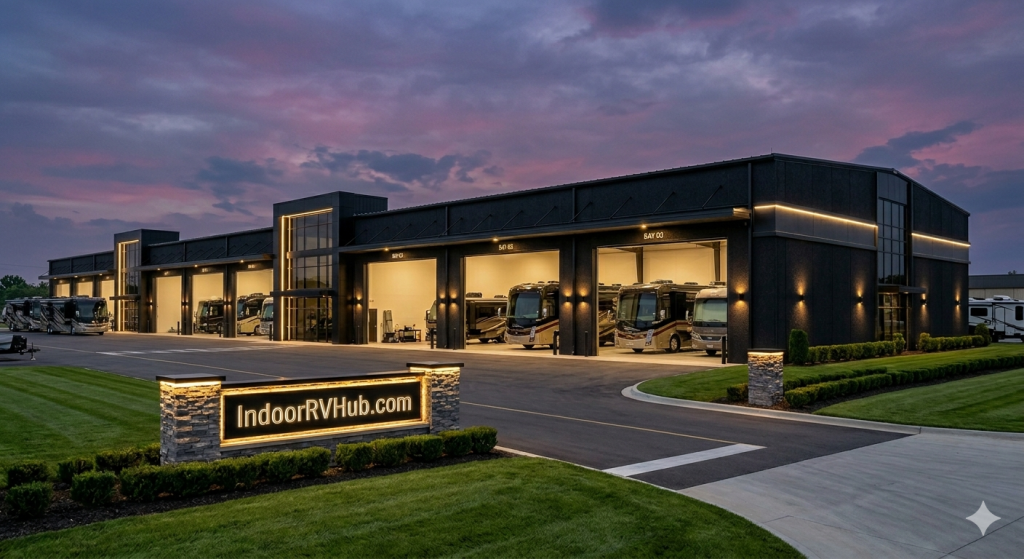
Professional storage facilities offer younger RV owners something that goes beyond simple parking. They offer security — gated access, 24-hour surveillance, and on-site management that protects what is often the second-largest investment a family makes after their home. They offer convenience — drive-up access, wide maneuvering lanes, and 24-hour retrieval that fits the spontaneous, adventure-driven lifestyle of younger RV enthusiasts who don’t plan their trips six months in advance. And increasingly, they offer amenities that make storage an extension of the ownership experience itself — wash bays, dump stations, electrical hookups, and climate-controlled units that keep sensitive equipment in peak condition between adventures.
For the younger RV owner who grew up researching everything online before making a decision, finding the right storage facility starts with a search — not a phone call to a friend, not a drive around the neighborhood, but a deliberate online search for the facility that best matches their needs, their budget, and their values. That search behavior is precisely why directories like IndoorRVHub exist — to connect the new generation of RV owners with the facilities that are best equipped to serve them.
What This Means If You Operate an RV Storage Facility
For storage facility owners and operators, the generational shift in RV ownership represents one of the most significant business opportunities in the industry’s recent history — and one that is still being largely overlooked by the majority of facilities across the country.
Here is the core insight: younger RV owners rent storage at dramatically higher rates than their older counterparts. The reasons are structural — HOA restrictions, smaller properties, urban and suburban living — and they are not going away. In fact, as HOA-governed communities continue to expand across the Sun Belt, the Mountain West, and the suburban rings of every major American city, the pool of RV owners who have no choice but to use professional storage will only grow larger. This is a structural demand driver, not a trend. Facilities that understand this now will be positioned to capture a disproportionate share of a growing market. Facilities that don’t will find themselves competing for a shrinking slice of the Boomer pie.
The younger RV owner also behaves very differently from the customer you may be accustomed to serving. They find you online — through search engines, through directories, through social media — rather than through word of mouth or a sign on the highway. They evaluate you through photos, reviews, and the quality of your online presence before they ever pick up the phone or drive to your location. They expect digital convenience — online reservations, automatic billing, and contactless access — as a baseline rather than a premium feature. And when they have a great experience, they share it — on Google, on Facebook, on Instagram, on Reddit — in ways that amplify your reputation to an audience you could never reach through traditional advertising.
The Counterintuitive Advertising Insight That Could Transform Your Business
Here is where the data leads to a conclusion that may seem surprising at first — but becomes obvious once you see it clearly.
Many RV storage facility owners, when they think about advertising and social media, instinctively target the audience they know best — the retired couple, the Boomer with the 40-foot Class A, the seasoned RV veteran who has been a customer for fifteen years. That audience is real, it is valuable, and it should not be ignored. But it is a shrinking audience. And targeting it exclusively means competing for the same diminishing pool of customers that every other facility in your market is also chasing.
The younger audience — the 32-year-old first-time RV buyer, the Millennial couple with a travel trailer and an HOA that won’t let them park it in the driveway, the Gen Z van-lifer who needs a secure base between road trips — is growing rapidly, underserved by most facilities, and actively searching for exactly what you offer. They are on Instagram. They are on Facebook groups. They are on TikTok. They are searching Google at midnight from their phones. And they are making storage decisions based on what they find online — which means the facility with the strongest online presence, the most compelling photos, and the most authentic community feel wins their business.
Targeting a younger audience with your advertising and social media content may feel counterintuitive if your current customer base skews older. But the data is unambiguous — the future of RV ownership in America is younger, more urban, more HOA-constrained, and more dependent on professional storage than any previous generation. The facilities that begin speaking to that audience now — with content that reflects their lifestyle, their values, and their search behavior — will not just survive the generational transition. They will own it.
The question is not whether younger RV owners are coming to your market. They already are. The question is whether they are finding you when they search — and whether what they find makes them want to call.
This featured blog post is from our friends at IndoorRVHub, the trusted online directory connecting RV and boat owners with quality indoor RV storage facilities throughout the United States. If you operate an indoor RV storage facility and would like to be included, please visit IndoorRVHub today. If you need storage to protect your valuable RV investment, then check out their growing list of facilities.